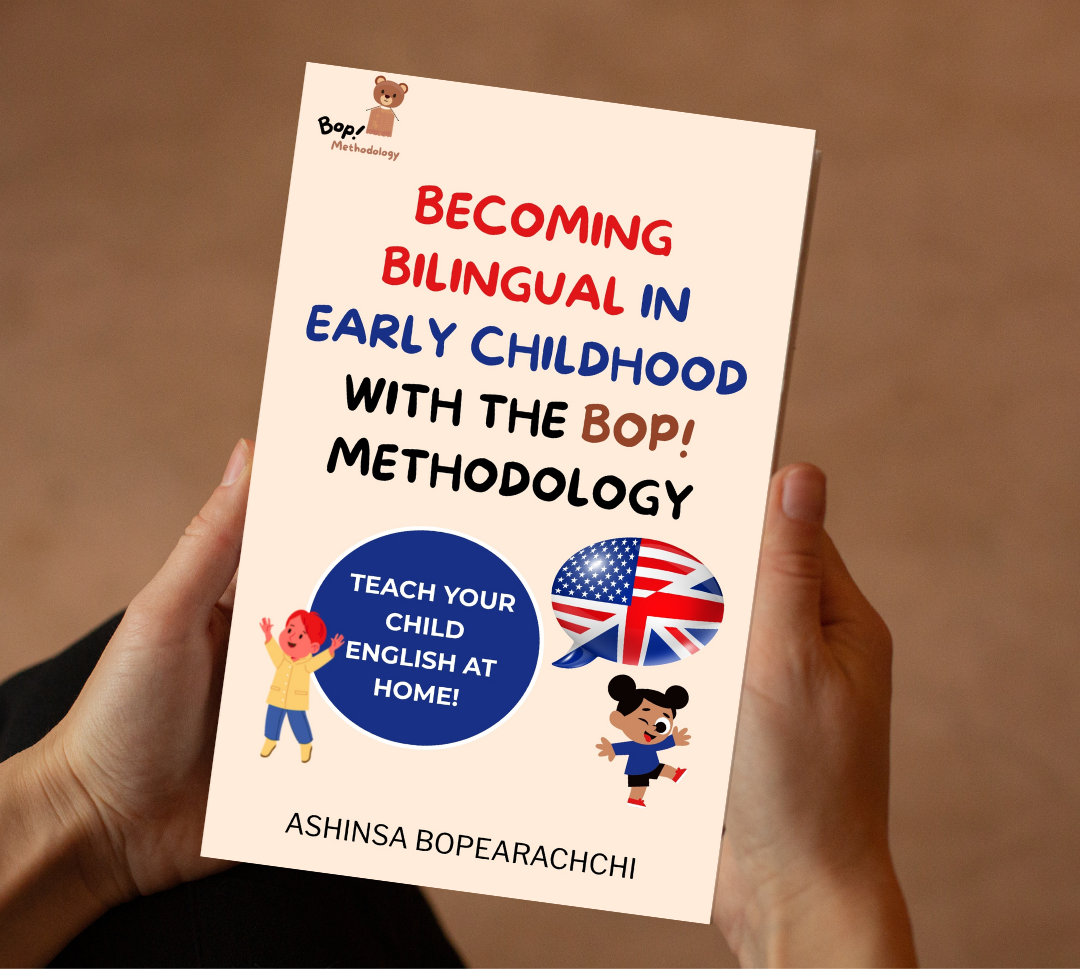
Becoming bilingual in early childhood with the Bop! methodology
“Becoming Bilingual in Early Childhood with the Bop! Methodology” is a warm and practical guide for parents who want to teach their child a second language from an early age, either independently or with the help of someone else, such as a nanny, au pair,babysitter, grandparent or relative.
The Bop! Methodology is a revolutionary language-learning approach designed specifically for children under ten. It helps young children reach a level of spoken and written fluency comparable to native speakers, even in languages not spoken in their home country.
It is complemented by a comprehensive pedagogical content for teaching English.
The Bop! Methodology is a revolutionary language-learning approach designed specifically for children under ten. It helps young children reach a level of spoken and written fluency comparable to native speakers, even in languages not spoken in their home country.
The Bop! Methodology is centered around how children learn to speak first, before reading and writing, mirroring how they acquired their first language. Unlike traditional language programs, the Bop! Methodology is rooted in how children aged 3-10 naturally learn through play.
Ideal for parents who want to raise bilingual children, pass on a minority language or teach English as a second language, the Bop! Methodology turns language acquisition into a fun, engaging experience. Based on play-based learning, this unique approach naturally builds a child’s language skills: first through meaningful spoken words, then richer expressions and finally confident reading and writing. Like weaving a beautifully structured fabric, the method helps children 'knit' their new language step by step, until fluency emerges naturally.
Bop! Methodology is fully adapted to the cognitive and emotional development of children aged 3 to 10. It supports their growth while providing one of the most effective and child-friendly pathways to bilingualism
This guide is perfect to teach a second language. It is for:
Bilingual parents raising children in monolingual environments
Grand-parents or relatives who wish to pass on a language to a child
Foreign-language speaking nannies, babysitters, and au pairs
Educators seeking efficient playful language methods
Anyone searching for a joyful, effective approach to early bilingualism
This book contains a wealth of practical resources for teaching children English at home, including:
20 Role-play scenarios
25 Puppet-show dialogues
Simple stories and songs to introduce early grammar
Curated lists of books, cartoons, and vocabulary list
Tips for common pronunciation challenges
Guidance for teaching early reading, writing, and foundational math in English
Help your child thrive in two languages — starting today!

The advantages of the Bop! methodology
The language teaching methodologies used in many education systems in the world, from kindergarten to high school, are rarely conducive to the acquisition of genuine bilingual competence.
Unlike school-based methods, Bop! methodology pedagogy is inspired by the way young children naturally acquire language, from kindergarten to primary school, in a situation of total immersion in a country where another language is dominant.
Mastery of the spoken language is first prioritized before developing the reading and writing skills. In this way, each new language is learned by mimicking the mechanics of total immersion learning, to get the best and most efficient results.
Games and varied activities are also important for children of this age. It's also essential to get down to their level, interact with them and take on their imaginary world. That's why the methodology presented here takes these requirements into account when learning the language.
By combining the pleasure of learning with complicity between child and adult, this method promotes the child's harmonious development, while enabling rapid acquisition of the language to be transmitted to reach a native command level.
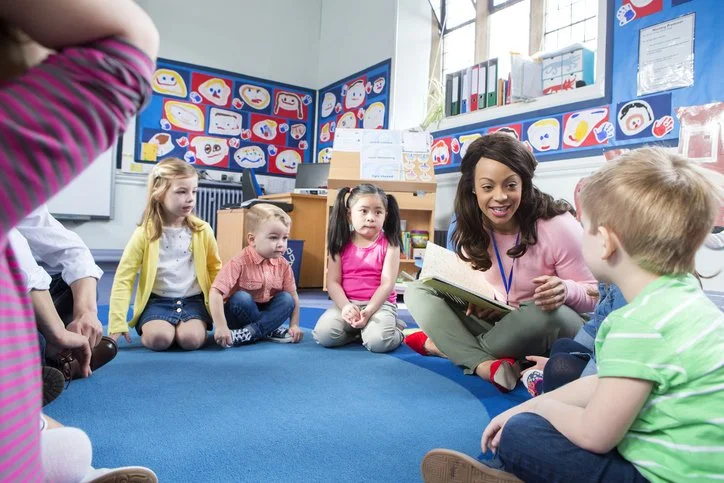
How does the Bop! methodology work?
Varied games and activities are important for children of this age. It's essential to get down to their level, interact with them and take on their imaginary world. For this reason, the Bop! methodology takes these requirements into account when learning the language.
Passing on a language with the Bop! methodology requires attention and commitment.
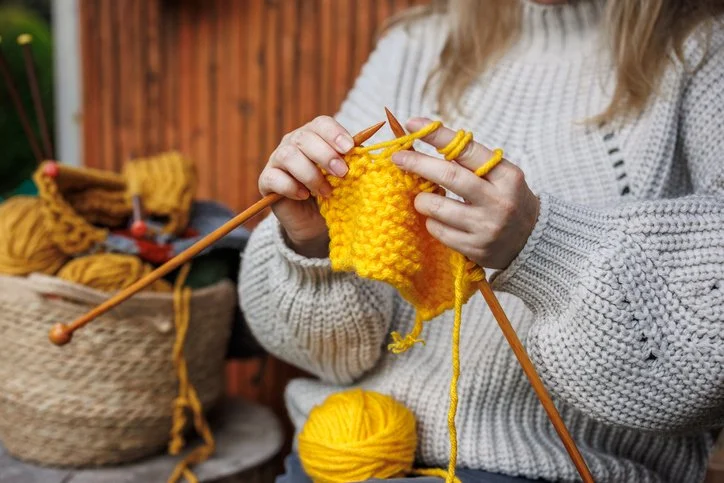
Learning takes the form of "knitting", with essential knots in place, such as words with basic meanings (like "yes", "no", "hello", "goodbye", "thank you"), which attach more complex expressions and meanings, to become a veritable linguistic "fabric". Mastery of the spoken language is prioritized over that of the written word. In this way, each new language is learned by mimicking the mechanics of total immersion learning.
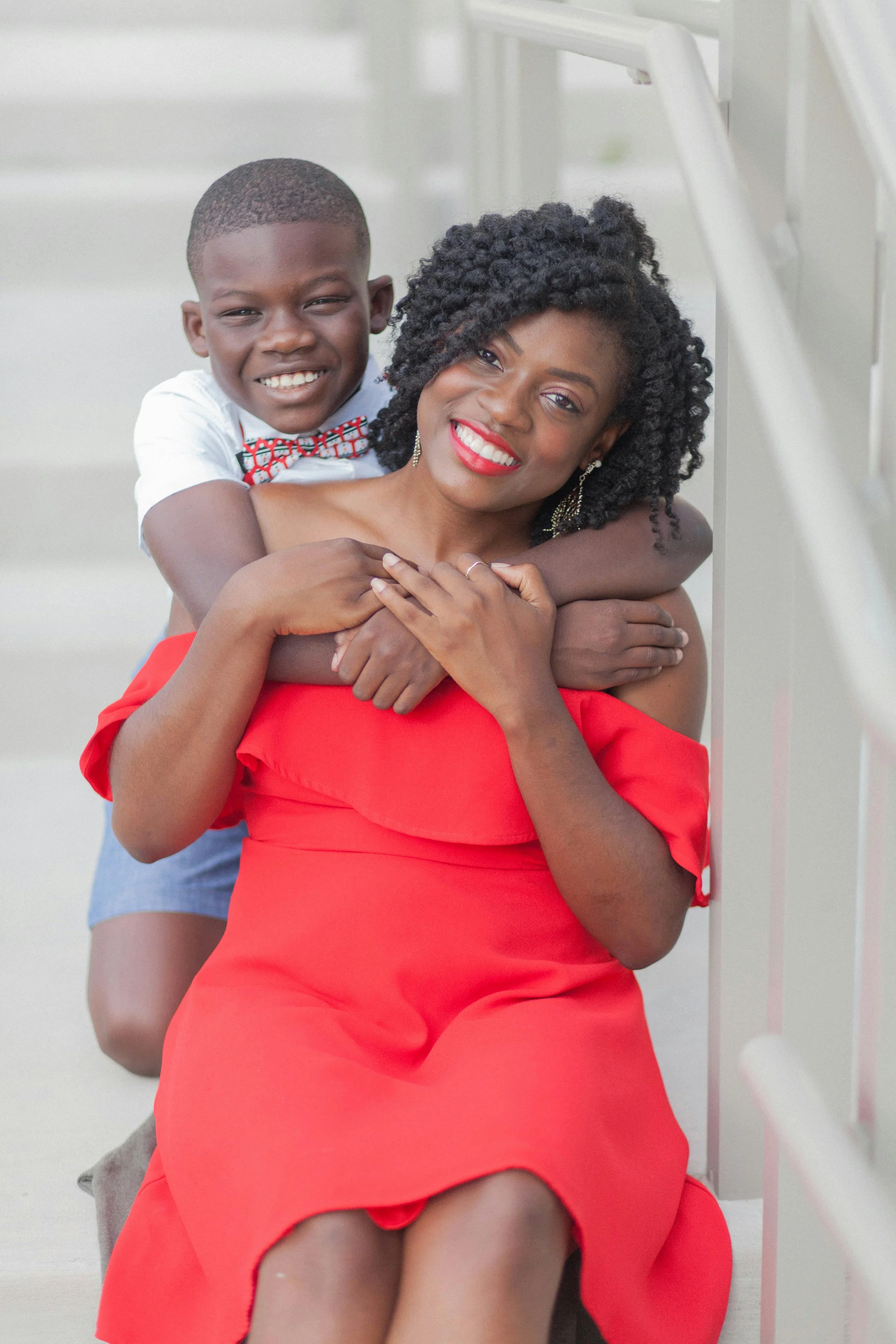
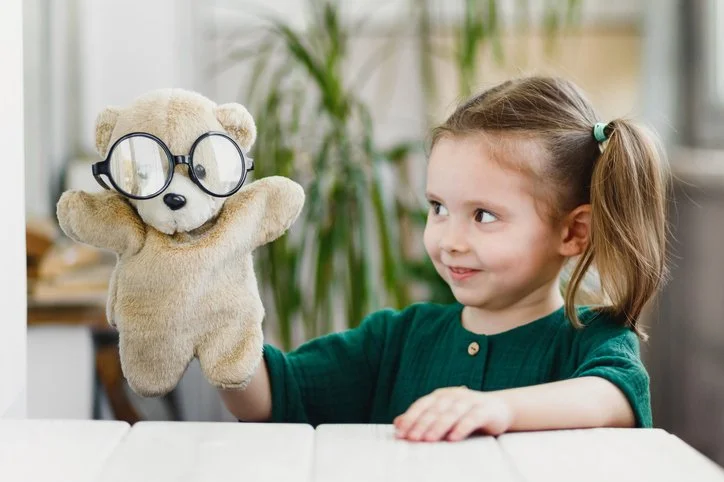
Bop! methodology is adapted to language transmission by a native or near-native speaker, by a parent, a nanny, a grand-parent, an au pair, etc
The language should represent more than just a means of communication, but a cultural heritage associated with one or more countries that the language transmitter enjoys sharing and celebrating on a daily basis.
By combining the pleasure of learning with the complicity between child and adult, the Bop! methodology promotes the child's harmonious development.
The language transmitter needs to enter the world of the child's imaginary games, and accompany them at their own pace, in a playful way, while transmitting a language using the Bop! methodology.
How can my child become bilingual?
This is a very common question for parents, who know that the language-learning methodologies used at school are often insufficient to make their children bilingual.
Parents also realize that, like them, learning a second language is not much fun and motivation is often lacking
The Bop! Methodology is a disruptive language learning methodology that enables children aged three to ten to become fluent in another language through "teaching" by a multilingual parent, nanny, au pair, babysitter or relative who speaks the target language, essentially through play at home. If you are interested in learning more, I invite you to purchase the book.
However, you may have other questions, to which I will provide answers.
What is the best age to learn a second language?
Although age is not the only factor, evidence shows that children find it easier to learn languages than adults do.[3] They can become bilingual when the right conditions are in place. It develops naturally and with little effort in a country where the language is widely spoken, but it becomes almost impossible in a country where the language is rarely spoken or taught poorly.
Fluency is more easily achieved through a bilingual education and integration into a community that speaks the language from an early age.
The Bop! Methodology is designed to help children aged three to ten reach fluency in a language, particularly in circumstances where learning a minority language is challenging.
Is it too late for my child to become bilingual?
It's never too late. Adults can also become bilingual, but they may not achieve the same level of fluency as a child who has spoken the language from an early age. They may also develop an accent, as brain plasticity reduces over time.
Bop! Methodology is designed for children aged three to ten, so you can use it if your child is within that age range. If you are interested in learning more, I invite you to purchase the book.
Do bilingual children get confused?
Multiple studies show that this is not the case if the languages are spoken consistently:
One parent speaks one language and the other parent speaks the other language (the now famous 'One Person, One Language' approach), or
one language is spoken at home and another outside the home ('Minority Language at Home' strategy), or
each language is spoken in different settings or communities (at home, at school, at grandparents' house, in communities that speak specific languages, in specific countries, etc.), and
the people who speak to or teach the child a language are native or near-native speakers of that language.
Can babies learn two languages at once?
The answer is yes. This is such a common situation that it should not be a concern, provided the languages are spoken logically (see the above paragraph).
Does early bilingualism delay speech?
Studies show no correlation between speech delay and bilingualism [4]. If parents notice a speech delay in their child, they should seek the necessary professional guidance, regardless of whether the child is raised in a monolingual or bilingual environment.
How can my child learn a language naturally?
Language teaching in schools is usually more akin to the study of linguistics than to natural language learning.
The most effective way for a child to become bilingual is to spend a year or more in a country where the target language is spoken. However, this is not an option for most parents, especially as immigration is severely controlled in most countries.
However, if your child is aged three to ten, you are multilingual and can pass on your language skills, you have a relative who is a native speaker and can interact with your child often, or you have the financial means to hire a native-speaking nanny, babysitter or au pair, then you can use the Bop! Methodology to teach your child English and make them a native speaker. The Bop! Methodology book is a practical, play-based guide for parents and carers who want to raise bilingual children or teach English or any other language naturally to children aged 3–10.
How can I teach my child a language at home?
While many books and blogs offer tips and general guidance, they don't provide a specific methodology with practical resources.
The Bop! Methodology book provides a step-by-step approach as well as practical resources for teaching a child a language at home, provided they are aged between three and ten. The book is available for purchase here.
The best way to make a child fluent, not just good at grammar
As mentioned earlier, schools use an inefficient, linguistics-inspired approach to teaching languages, introducing grammar too soon before the child has become fluent in the language.
Bop! Methodology bases its approach on child psychology, which theorises how children acquire new skills at an early age. It favours oral fluency over written and academic fluency, enabling the child to become a true native speaker.
How do children learn languages like native speakers?
For decades, schools have used the wrong approach to teaching languages, which has demotivated children from learning languages. The school methodologies are largely inspired by linguistics, but not by child development psychology. Oral fluency should be prioritised above all else because this is how babies and young toddlers naturally learn their mother tongue.
Bop! Methodology is based on child psychology and motivates children to learn through play. It favours oral fluency over written and academic fluency, enabling children to become true native speakers.
Bop! Methodology provides a practical approach for teaching a child a language at home, provided they are aged between three and ten. The book is available for purchase here.
Contact me
For any matter, feel free to contact me by using the form.